
Truth, Reconciliation, and National Renewal: An Open Letter to President Bola Ahmed Tinubu, GCFR, in Light of Magnifica Humanitas
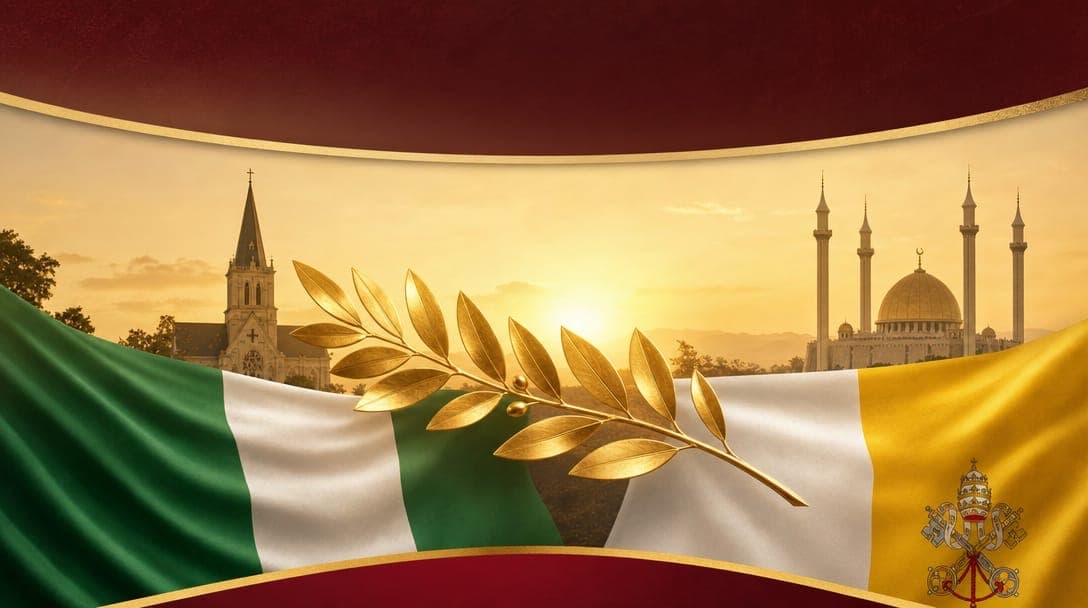
By Fr. Oliver CCE | Ethical Innovator | Synodal Secretary | Founder, www.yescatholichangout.com
1. Opening: A Nation at a Crossroads
Every age presents its leaders with a choice between the path of convenience and the path of conscience. Nigeria, a nation of extraordinary promise and equally profound complexity, stands once again at such a crossroads. Across its bustling cities, fertile river valleys, and vast savannahs, millions of citizens pray and work for a future marked by justice, security, and shared prosperity. Yet the weight of history, its unresolved grievances, its unacknowledged sacrifices, and its unfinished dreams, continues to cast a long shadow over public life.
It is in this spirit that I write, not as a politician, but as a priest, an ethical innovator, and a servant of the Church’s synodal journey. I write as Fr. Oliver CCE, founder of Yes Catholic Hangout, a platform dedicated to fostering dialogue among Catholics and people of good will on matters of faith, ethics, technology, and the common good. This open letter is addressed with respect to His Excellency, President Bola Ahmed Tinubu, GCFR, and through him to the Nigerian people: a constructive invitation to embrace national moral renewal rooted in truth, reconciliation, justice, and authentic leadership.
The inspiration for this appeal comes from a timely and luminous source: Pope Leo XIV’s encyclical Magnifica Humanitas. In that document, the Holy Father reminds the human family that progress, whether technological, political, or economic, must never be severed from the moral law engraved upon the human heart. He calls the peoples of the earth to acknowledge historical wrongdoing, seek forgiveness where it is due, restore wounded relationships, and ensure that every advance in knowledge and power serves the dignity of the human person. These are not abstract theological ideals. They are practical principles capable of guiding nations through their deepest crises and toward their noblest possibilities.
Nigeria, Africa’s most populous nation and one of its most consequential democracies, matters not only to its own citizens but to the continent and the world. What Nigeria becomes, whether a beacon of reconciliation and responsible governance or another cautionary tale of missed opportunity, will shape the moral imagination of generations. This letter is therefore offered in hope: hope that truthful remembrance can heal, that ethical leadership can inspire, and that a nation built on fraternity, subsidiarity, and solidarity can yet emerge.
2. The Moral Vision of Magnifica Humanitas
Pope Leo XIV’s Magnifica Humanitas arrives at a moment when humanity is intoxicated by its own inventiveness. Artificial intelligence, biotechnology, digital finance, and global communications have granted unprecedented power to individuals, corporations, and states. Yet the encyclical insists that every expansion of human capacity must be measured against a single criterion: does it serve the human person in his or her integral dignity? Where technology becomes an instrument of domination, exclusion, or deception, it ceases to be a sign of human greatness and becomes a new form of bondage.
At the heart of the encyclical lies a call to historical honesty. The Holy Father teaches that nations and institutions, no less than individuals, are summoned to examine their past with courage. This does not mean wallowing in guilt or assigning simplistic blame. Rather, it means refusing to hide behind the comfortable myths that prevent genuine healing. Acknowledgment of wrongdoing, whether in the form of colonial exploitation, unjust discrimination, corruption, or violence against the vulnerable, is the first step toward a society worthy of the future.
Equally important is the encyclical’s insistence on forgiveness and reconciliation. Forgiveness is not the suppression of justice. It is its completion. Reconciliation is not weakness. It is the moral maturity that allows a divided people to build a common future. The Church has long understood this. From the sacrament of Reconciliation to the pursuit of peace in conflict-torn lands, Catholic tradition holds that authentic renewal requires both truth and mercy. The truth sets free; mercy makes freedom bearable. Together, they form the foundation of what the Church’s social teaching calls the common good.
Catholic Social Teaching, developed across more than a century of papal and conciliar reflection, provides the broader framework. Rerum Novarum defended the dignity of workers. Pacem in Terris called for peace rooted in right order. Gaudium et Spes situated the Church in dialogue with the modern world. Laborem Exercens, Sollicitudo Rei Socialis, Centesimus Annus, and the more recent social encyclicals of Pope Francis, Laudato Si’, Fratelli Tutti, and the synodally inspired reflections of the Economy of Francesco, have each deepened the Church’s call for justice, solidarity, subsidiarity, and care for our common home. Magnifica Humanitas now adds its voice, insisting that the future must be humane as well as advanced, reconciled as well as powerful.
3. Nigeria’s Journey: History, Wounds, and Hope
Nigeria’s story is one of resilience, creativity, and faith. From the ancient kingdoms of the north and the forest civilizations of the south to the vibrant pluralism of the modern republic, Nigerians have demonstrated an extraordinary capacity to build community across difference. The nation’s ethnic, linguistic, and religious diversity is not merely a demographic fact. It is a cultural wealth that, when nurtured by justice, can become a formidable source of national strength.
Yet Nigeria’s journey has also been marked by deep wounds. The colonial period left behind borders, institutions, and economic structures that often prioritized extraction over development. The independence of 1960 was followed by years of political instability, civil conflict, and the devastating Biafran war, whose memory still lives in the hearts of millions. Decades of military rule, despite the heroic efforts of pro-democracy activists, weakened institutions, corroded public trust, and entrenched patterns of corruption that continue to frustrate national development.
Amid these trials, the Church in Nigeria played a remarkable role. Irish missionaries, alongside clergy and religious from many nations, arrived with the Gospel, but they also came with schools, hospitals, orphanages, and agricultural missions. They learned local languages, translated the Scriptures, educated generations of leaders, and stood with the poor. Their contributions were not without human imperfection, yet their sacrifices and services are woven into the fabric of Nigerian education, healthcare, and social cohesion. Acknowledging this contribution is not an act of nostalgia. It is an act of justice and historical truth.
The wounds of the past, however, cannot be healed by silence. The Church itself has learned, often painfully, that the path to holiness runs through honest examination of conscience. Nigeria, too, must find the courage to name its historical injuries without rancor, to honor its heroes without triumphalism, and to mourn its failures without despair. Such remembrance is the precondition for a national identity that is both truthful and hopeful.
4. The Spirit of Repentance and Reconciliation
Reconciliation, in the biblical and Catholic tradition, is never a cheap exchange of pleasantries. It is a demanding spiritual and social process that begins with truth, passes through justice, and is sealed by mercy. Saint Paul speaks of a ministry of reconciliation entrusted to the Church; the prophets of Israel thundered against injustice while simultaneously offering the promise of restoration. This same dynamic can animate a nation’s public life.
For Nigeria, reconciliation is not weakness. It is the moral maturity required to transform a federation of competing interests into a community of shared destiny. It means that political disagreements, ethnic grievances, and religious tensions are addressed not through manipulation or suppression but through transparent dialogue, just institutions, and sincere gestures of repair. A leader who dares to speak the truth about the past and extend the hand of reconciliation does not diminish his authority. He deepens the legitimacy of his office.
Ethical leadership, in this sense, is the foundation of sustainable development. Economies do not flourish where contracts are suspect, courts are compromised, and citizens fear arbitrary power. Institutions do not strengthen where impunity is rewarded and public service is treated as private opportunity. Trust, once lost, is the most expensive commodity in national life. It can only be rebuilt through consistent truthfulness, accountability, and respect for the rule of law.
President Tinubu, like every Nigerian leader before and after him, bears a weight of responsibility that is both political and moral. The decisions made in the present will either compound the alienation of the past or open a new chapter of national confidence. The question is not whether Nigeria’s challenges are immense, they are. The question is whether the nation can summon the moral courage to address them in a spirit of humility, justice, and hope.
5. Four Proposals for National Dialogue
In the spirit of constructive dialogue rather than political demand, I wish to revisit four proposals that have emerged from the conversations fostered by Yes Catholic Hangout. Each is offered as a contribution to national reflection, grounded in the ethical framework of Magnifica Humanitas and the broader tradition of Catholic Social Teaching.
5.1 Honoring the Historical Contribution of Irish Missionaries
The first proposal is a national acknowledgment of the historical contribution and sacrifices of Irish missionaries in Nigeria. These men and women, together with missionaries from other lands, planted seeds of education and healing that continue to bear fruit. They built schools that formed leaders, clinics that served the sick, and communities that offered refuge in times of turmoil. A formal acknowledgment, whether through educational curricula, historical commemorations, or public recognition, would be an act of gratitude and truth. It would also remind Nigerians that their national story includes acts of generosity and solidarity across cultural and religious boundaries.
5.2 Gestures of Reconciliation and Historical Remembrance
The second proposal calls for appropriate gestures of reconciliation and historical remembrance where warranted. This is not about reopening old wounds for political advantage. It is about allowing the nation to grieve, remember, and learn. Memorials, truth-seeking processes, and reconciliatory ceremonies can help transform painful memories into shared moral capital. Where historical injustices have left particular communities marginalized, targeted efforts at restitution and inclusion, always guided by justice and prudence, can demonstrate that the nation takes its own moral history seriously.
5.3 Secure, Ethical, and Transparent Digital Electoral Systems
The third proposal concerns the development of secure, ethical, and transparent digital electoral systems. Democracy in Nigeria, and across Africa, cannot mature if citizens doubt the integrity of the ballot. Technology, when governed by clear ethical standards, can strengthen participation, reduce fraud, and increase public confidence. Yet digital systems must be designed with transparency, independent oversight, and respect for the privacy and dignity of every voter. The common good requires that electoral technology serve the people, not the ambitions of any party or faction. This is a concrete application of the principle that innovation must be accountable to human dignity.
5.4 Respect for Constitutional Principles in Local Governance
The fourth proposal is a renewed commitment to constitutional principles that promote accountable and effective local governance. The principle of subsidiarity teaches that decisions should be made at the lowest competent level, closest to the people affected by them. Strengthening local governance, through fair resource allocation, transparent fiscal management, and genuine community participation, empowers citizens, reduces corruption, and allows diverse regions to address their particular needs. A Nigeria that respects the constitutional architecture of local accountability is a Nigeria more capable of peace and prosperity.
6. Ethical Governance and Artificial Intelligence
The moral logic of Magnifica Humanitas extends directly into one of the defining challenges of our time: the governance of Artificial Intelligence. AI, like every powerful technology, is not neutral. It reflects the values, biases, and intentions of those who design, deploy, and regulate it. When algorithms are used to manipulate voters, exclude minorities, concentrate wealth, or evade accountability, they become instruments of a new exploitation. When they are used to expand access to education, improve healthcare, protect the environment, and strengthen democratic participation, they become servants of the common good.
The parallels between historical exploitation and contemporary digital injustice are striking. Colonial extraction took natural resources and labor without fair return; today, digital extraction can harvest personal data, attention, and economic value without meaningful consent. Past forms of exclusion denied education and citizenship to entire populations; today, algorithmic bias can replicate those exclusions at scale. Misinformation, like old propaganda, can poison public trust and incite violence. The task of ethical governance is therefore not merely to regulate technology but to ensure that every technological system remains accountable to the dignity of every human person.
Responsible AI must be governed by several principles. First, transparency: citizens have a right to know how automated decisions affect their lives. Second, accountability: those who design and deploy AI systems must be answerable for their consequences. Third, inclusion: the benefits of technological progress must reach the poor and the marginalized, not only the wealthy and the connected. Fourth, solidarity: technological development must serve the common good of the entire human family, not merely the interests of powerful corporations or states. Fifth, subsidiarity: local communities, civil society, and religious institutions must have a meaningful voice in shaping how technology is used in their societies.
President Tinubu has spoken of the need for economic reform and technological modernization. These goals are laudable. But they will be sustainable only if they are pursued within an ethical framework. A Nigeria that leads Africa in ethical AI governance, one that protects citizens from digital harm while promoting innovation, would offer a powerful model to the world. It would show that technological progress and human dignity can advance together, not as rivals but as partners.
7. The Global Conversation
Nigeria’s renewal is not a domestic concern alone. It is part of a global conversation about the kind of world we are building. Pope Francis, in Fratelli Tutti, called for a culture of encounter that overcomes the isolation, nationalism, and indifference that fragment the human family. In Laudato Si’, he reminded us that social justice and ecological care are inseparable: the same logic that exploits the poor also exploits the earth. The Economy of Francesco has invited young economists, entrepreneurs, and activists to imagine an economy that is more humane, sustainable, and fraternal. And Magnifica Humanitas now challenges humanity to ensure that every innovation serves the dignity of the person.
These documents are not disconnected pronouncements. They form a coherent ethical vision: a world in which every person is recognized as a brother or sister, every community is respected in its proper autonomy, every economic system is ordered toward the common good, and every technological advance is judged by its service to human flourishing. Nigeria, with its vast youth population, its entrepreneurial dynamism, its deep religious traditions, and its strategic position in Africa and the world, is uniquely placed to contribute to this vision.
A Nigeria distinguished by justice, innovation, fraternity, transparency, and peace would be a gift not only to West Africa but to the whole world. It would demonstrate that a large, diverse, post-colonial nation can overcome the legacies of extraction and division through the patient work of ethical politics. It would show that democracy, when rooted in truth and solidarity, can deliver dignity as well as prosperity. And it would remind the global community that the most important investments any nation can make are not merely in infrastructure or technology but in the moral character of its public life.
8. Concluding Appeal
To President Tinubu, I offer this letter not as a criticism but as an appeal from one who believes in Nigeria’s vocation. The path of national renewal is never easy. It requires leaders who are willing to tell the truth, even when it is inconvenient; to seek reconciliation, even when it is costly; to govern with integrity, even when corruption offers easier rewards. It requires a vision of Nigeria that is larger than any party, ethnic group, or religious community. It requires the confidence that, with God’s grace and the people’s cooperation, a new Nigeria is possible.
To Nigeria’s leaders in every sphere, executive, legislative, judicial, traditional, and religious, I appeal for a renewed commitment to the common good. The nation needs institutions that are transparent, laws that are justly enforced, and a public culture in which service is honored above self-interest. The task of building such a society belongs to all who hold power and influence, and it will be measured by the dignity afforded to the weakest among the people.
To Nigeria’s religious communities, Christian and Muslim alike, I say: you are the guardians of the nation’s moral conscience. In your mosques and churches, in your schools and hospitals, in your advocacy and charity, you bear witness to the truths that politics alone cannot generate. Continue to pray, to teach, to reconcile, and to speak courageously for justice and peace. The Nigerian soul is shaped not only by laws but by the faith of its people.
To Nigeria’s civil society, its journalists, its teachers, its workers, and its young people, I say: do not surrender to cynicism. The future is forged by those who refuse to accept that corruption, violence, and inequality are inevitable. Your creativity, your energy, and your hope are the nation’s most precious resources. Organize, educate, advocate, and vote. Build the Nigeria you wish to inherit.
To the international community, I appeal for partnership rather than paternalism. Nigeria’s challenges require support, but that support must respect Nigerian sovereignty and amplify Nigerian solutions. Trade, investment, technology transfer, and debt relief must be directed toward the empowerment of ordinary people, not merely the enrichment of elites. The world has much to gain from a stable, just, and flourishing Nigeria.
Finally, to all who read this letter, I return to the wisdom of Magnifica Humanitas. The human person is indeed magnificent, made in the image of God, endowed with reason and conscience, capable of both great evil and astonishing goodness. The work of national renewal is ultimately the work of helping every person and every institution become more fully human: more truthful, more just, more reconciled, more free.
May God bless Nigeria. May He grant its leaders wisdom, its people peace, and its land the justice it so richly deserves.
“History becomes a source of hope when truth is embraced, justice is pursued, reconciliation is lived, and every innovation serves the God-given dignity of every person.”