
The Moral Void at the Heart of Algorithmic Governance
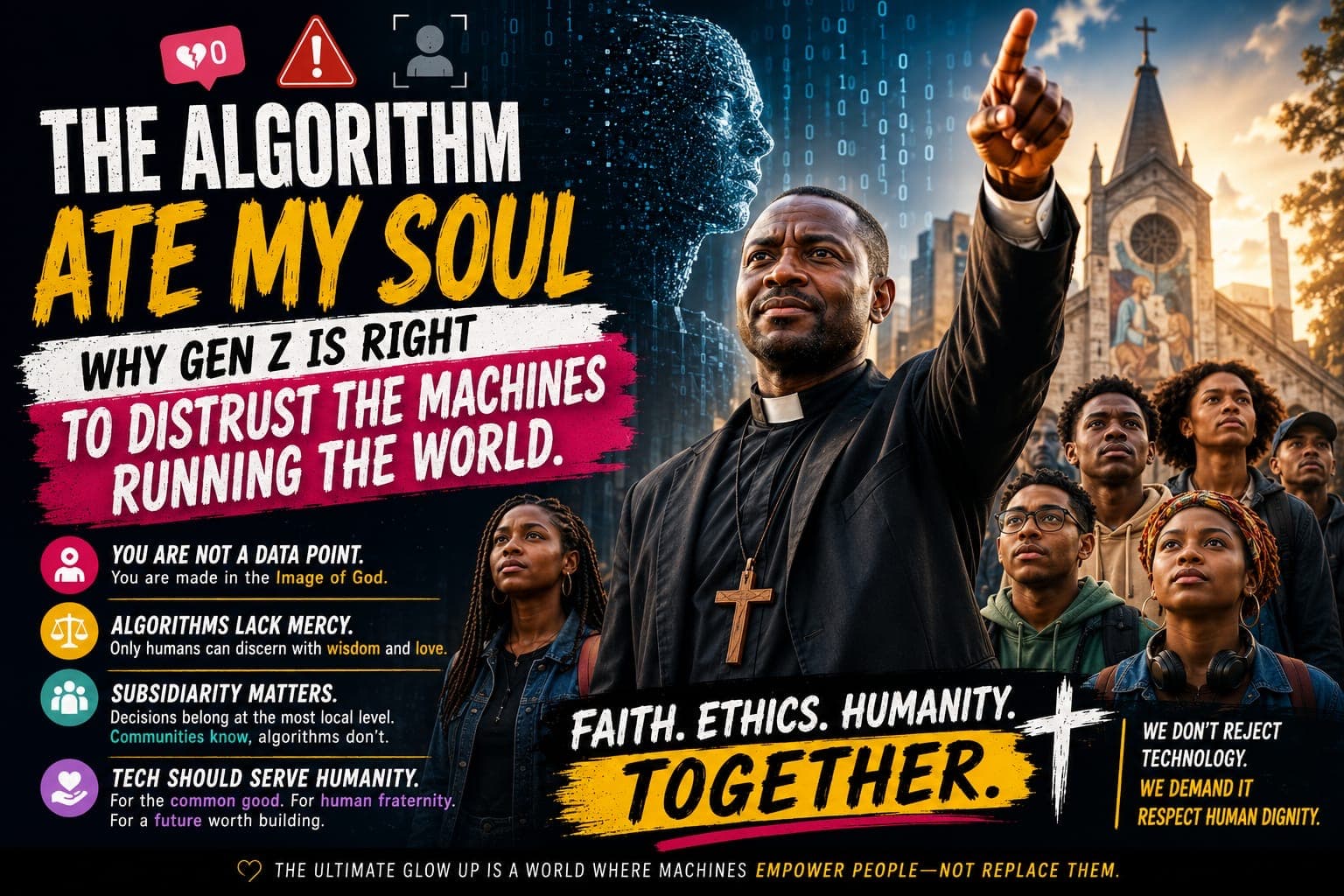
The Algorithm Ate My Soul: Why Gen Z Is Right to Distrust the Machines Running the World
Imagine applying for your dream job after years of study, only to receive an automated rejection within seconds. There is no explanation, no conversation, and no opportunity to appeal. Later, the same invisible system declines your loan application or quietly places someone else ahead of you for housing. Every decision arrives with the same message: the system has determined the outcome.
For many young people, this is no longer science fiction. It is becoming everyday reality.
Generation Z has grown up inside the digital revolution. They understand better than most that technology can educate, connect, inspire, and create opportunity. Yet they also recognize a growing danger. When algorithms begin making life-changing decisions without transparency or accountability, people stop feeling like persons and start feeling like profiles.
Their concern deserves more than dismissal. It deserves serious moral reflection.
At the heart of today's debate about artificial intelligence lies not simply a technological question but a profoundly human one:
Who should decide what a human person is worth?
When the Algorithm Knows Your Data—but Not Your Story
Modern society increasingly prizes efficiency. Governments, corporations, universities, financial institutions, healthcare providers, and employers now rely on algorithmic systems to sort applications, assess risk, detect fraud, predict behaviour, and recommend decisions.
Many of these technologies offer undeniable benefits. They process vast quantities of information faster than any human being, reduce repetitive tasks, and support professionals with valuable insights.
Yet speed is not wisdom.
An algorithm may recognize statistical patterns, but it cannot understand grief. It can calculate probability, but it cannot measure forgiveness. It can rank productivity, but it cannot perceive courage, sacrifice, compassion, or redemption.
Here lies the moral void at the heart of algorithmic governance.
The deepest danger is not merely technical error. It is the quiet temptation to believe that everything valuable about a person can be reduced to measurable data.
Many young people instinctively resist this assumption.
Their skepticism is not irrational. It reflects a healthy awareness that human beings are more than engagement metrics, behavioural predictions, credit scores, biometric identifiers, or purchasing histories.
When every interaction becomes a transaction, society risks losing its moral imagination. Technology itself is not the problem. The danger arises when computational thinking begins replacing ethical judgment.
A human life can never be fully understood through analytics alone.
The Gospel has always insisted upon this truth.
The Wisdom of the Heart
In his 2024 Message for the World Day of Peace, Artificial Intelligence and Peace, Pope Francis welcomed technological innovation while offering an essential reminder: artificial intelligence lacks "the human capacity for ethical discernment" and cannot possess what he called the wisdom of the heart.
This is not an argument against technology.
It is an argument for humanity.
The Holy Father distinguishes between intelligence that processes information and wisdom that seeks the good of the human person.
Artificial intelligence can optimize decisions.
Only human beings can take responsibility for them.
Every algorithm reflects human choices: what data to collect, what objectives to maximize, what values to prioritize, and whose interests to protect.
Technology is never morally neutral once it begins shaping human lives.
More Than Data
Christian anthropology offers a powerful response through the doctrine of the Imago Dei—the belief that every person is created in the image and likeness of God.
Translated into today's digital culture, the message is remarkably simple.
You are not your algorithmic score.
You are not your search history.
You are not your productivity ranking.
You are not the sum of your data.
Every human person possesses an inherent dignity that no database can assign and no algorithm can remove.
God's love is never earned through optimization.
It is given freely.
This gratuity—the gift of love without calculation—stands at the heart of the Christian understanding of the human person.
Algorithms naturally operate through probabilities, rankings, and optimization.
The Gospel operates through mercy.
One measures performance.
The other reveals personhood.
This is why Christ consistently saw those whom society's systems overlooked: the tax collector, the Samaritan woman, the blind beggar, the thief on the cross, and countless others whom the world had already dismissed.
Grace does not follow predictive analytics.
Grace creates new beginnings.
Putting the Human Person Back in the Driver's Seat
The Church does not propose abandoning technology.
Rather, she proposes governing it according to moral principles that safeguard human dignity.
Among the most important is the principle of subsidiarity.
Catholic Social Teaching teaches that decisions affecting people's lives should be made at the most local and personal level possible, with larger institutions supporting—not replacing—human responsibility.
Applied to today's digital world, the principle remains remarkably relevant.
A distant server should never have the final word on a person's future when human judgment, local knowledge, and compassion remain possible.
People deserve explanations.
They deserve accountability.
They deserve the right to appeal.
Above all, they deserve to encounter another human being whenever decisions profoundly affect their lives.
This vision explains why the Holy See has supported initiatives such as the Rome Call for AI Ethics, encouraging governments, researchers, technology companies, and civil society to develop artificial intelligence that is transparent, inclusive, accountable, and centred on the human person.
Far from resisting innovation, the Church challenges innovators to build technologies worthy of the people they are meant to serve.
Gen Z's growing demand for transparency is therefore not a threat to technological progress.
It is an invitation to make progress genuinely human.
A Manifesto for the Digital Future
The future does not belong to algorithms alone.
It belongs to people.
Artificial intelligence will continue transforming medicine, education, finance, communication, governance, and countless other fields. The real question is whether these transformations will strengthen human fraternity or quietly replace it with automated calculation.
Efficiency without compassion is not progress.
Prediction without mercy is not justice.
Automation without accountability is not good governance.
Humanity's greatest achievement will never be creating machines that imitate intelligence.
It will be building technologies that honour the dignity of every human person.
The Church contributes to this conversation not through fear or nostalgia, but through hope rooted in the conviction that every person is infinitely more valuable than any prediction a machine could generate.
As artificial intelligence becomes increasingly influential, society must insist that technology remain a servant rather than a master.
The future worth building is one in which algorithms assist human judgment but never replace conscience; where innovation advances the common good; and where every person retains the right to be seen not as a statistic, but as a neighbour.
Because no algorithm can ever calculate the immeasurable worth of a human soul.