
Human Dignity: The First Algorithm
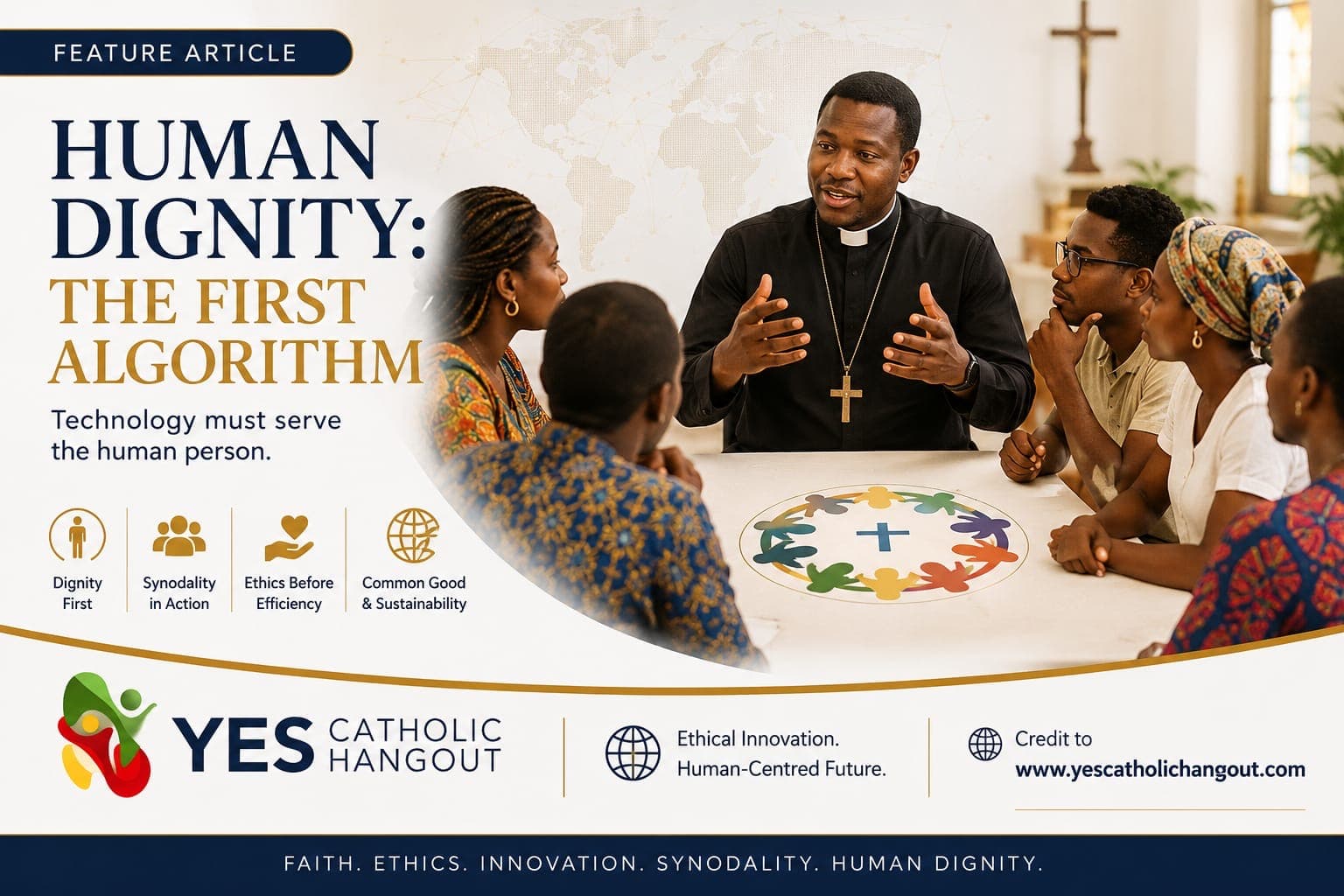
Artificial Intelligence is rapidly reshaping how humanity communicates, learns, governs, heals, trades, and even wages war. Algorithms increasingly influence employment, education, finance, healthcare, public policy, and personal relationships. Yet beneath every technological breakthrough lies a more fundamental question that no machine can answer on its own: who is the human person that every algorithm is ultimately meant to serve?
This question is not merely technical. It is profoundly anthropological, ethical, and spiritual. Before humanity ever wrote an algorithm in computer code, God had already inscribed the first and enduring “algorithm” into creation: the inviolable dignity of every human person, created in His image and likeness (Genesis 1:26-27). Human dignity is therefore not one value among many. It is the first principle from which every ethical technology, political institution, economic system, and social innovation must begin.
This conviction lies at the heart of Magnifica Humanitas, a human-centred framework for ethical innovation that seeks to unite faith, reason, technology, and global responsibility. Rather than asking merely what Artificial Intelligence can do, Magnifica Humanitas asks what technology ought to become when it is placed at the service of the human family.
1. The Human Person Before the Machine
Modern societies often celebrate speed, automation, efficiency, and optimisation. These achievements have genuine value. Yet technology becomes dangerous whenever efficiency replaces compassion, prediction replaces freedom, or profitability eclipses the dignity of persons.
Catholic Social Teaching has consistently affirmed that the human person is never a means to an end but always an end in himself or herself. Gaudium et Spes reminds us that the human person is “the only creature on earth which God willed for itself.” Dignitas Infinita further emphasises that human dignity is intrinsic and cannot be earned, measured, bought, or lost because of age, disability, poverty, migration, productivity, or social status.
Artificial Intelligence must therefore remain accountable to this truth. No algorithm should determine human worth. No technological system should reduce people to behavioural data, consumer profiles, biometric identifiers, or statistical probabilities. Human beings are persons, not products; neighbours, not datasets.
2. Human Wisdom Beyond Artificial Intelligence
Artificial Intelligence processes information with extraordinary speed, but it does not possess conscience. It can recognise patterns, yet it cannot love. It may predict behaviour, but it cannot forgive. It can optimise decisions, yet it cannot discern moral truth.
The distinction between computational intelligence and human wisdom has become one of the defining ethical questions of our age. Wisdom grows through relationships, sacrifice, prayer, listening, memory, and responsibility. It is formed within families, communities, cultures, and faith traditions.
Synodality offers a powerful witness here. A synodal Church reminds humanity that authentic discernment is not produced by isolated calculation but through listening, dialogue, participation, and openness to the Holy Spirit. This ecclesial experience offers valuable insights for societies seeking inclusive models of technological governance.
3. Magnifica Humanitas: A Human-Centred Vision
Magnifica Humanitas proposes that every technological ecosystem should be evaluated through principles that protect both innovation and human flourishing.
Its guiding convictions are simple yet transformative:
Human dignity before technological efficiency.
Ethics before optimisation.
Persons before platforms.
Dialogue before polarisation.
Responsibility before automation.
Community before isolation.
Wisdom before speed.
Sustainability before short-term profit.
The common good before private advantage.
These principles resonate deeply with Fratelli Tutti, which calls the world to recover fraternity and social friendship; with Laudato Si’, which reminds us that technological progress must respect creation and future generations; and with the Economy of Francesco, which invites entrepreneurs to build economies that place persons before profit and solidarity before exclusion. Together they offer not resistance to innovation but its moral renewal.
4. Ethical Innovation as a Global Opportunity
Far from limiting economic growth, ethical technology represents one of the greatest opportunities of the twenty-first century. Around the world, governments, investors, universities, healthcare systems, financial institutions, and businesses increasingly seek trustworthy Artificial Intelligence that is transparent, accountable, secure, inclusive, and respectful of human rights. Organisations that embed ethical governance into the design of their technologies are likely to build stronger public trust, attract long-term investment, reduce regulatory risk, and create more resilient innovation ecosystems.
This emerging landscape creates opportunities for ethical AI auditing, digital ethics education, algorithmic governance, responsible data stewardship, inclusive software design, cybersecurity, assistive technologies, healthcare innovation, ethical fintech, green computing, and human-centred digital infrastructure.
In this sense, ethical technological development is not only a moral responsibility. It is also a sustainable economic opportunity. The next generation of global innovation will increasingly be shaped by those who understand that trust has become one of the world’s most valuable assets.
Africa and the Global South possess unique contributions to make. Rich traditions of community, solidarity, intergenerational wisdom, and respect for the dignity of every person can enrich global conversations that have often been dominated by purely technical or commercial perspectives. Rather than simply importing technological models, these regions can help shape a more humane digital civilisation grounded in relationships, justice, and the common good.
5. A Shared Responsibility
Building an ethical digital future requires collaboration across every sector of society.
Policymakers must develop regulatory frameworks that protect human rights while encouraging responsible innovation. Technology developers should incorporate ethical reflection from the earliest stages of design rather than treating it as an afterthought. Educational institutions should prepare students not only to engineer intelligent systems but also to become morally responsible innovators.
Catholic dioceses, parishes, schools, universities, and pastoral ministries can contribute by fostering digital literacy, ethical discernment, dialogue, and formation rooted in the Gospel. Families remain the first schools of human dignity, teaching children that authentic intelligence is measured not only by knowledge but by compassion, responsibility, and service.
Business leaders and entrepreneurs are called to recognise that long-term prosperity grows where trust, transparency, accountability, and respect for persons become competitive strengths rather than regulatory obligations. International organisations likewise have an opportunity to promote global standards that protect vulnerable populations while ensuring that technological progress serves peace, justice, and integral human development.
6. The First Algorithm for the Future
The future of Artificial Intelligence will not ultimately be decided by the power of processors, the scale of data centres, or the sophistication of algorithms. Its true measure will be whether it protects the child, honours the elderly, serves the poor, welcomes the migrant, empowers persons with disabilities, strengthens families, safeguards creation, and promotes peace among nations.
Every civilisation leaves behind a defining legacy. Ours should not simply be remembered for creating intelligent machines, but for ensuring that intelligence remained guided by wisdom, justice, and love.
Human dignity is the first algorithm because it is the first truth that every technology must respect and the final measure by which every innovation will ultimately be judged.
If humanity chooses this path, Artificial Intelligence can become not a rival to human flourishing but a powerful instrument for healing, education, sustainable development, economic inclusion, and global solidarity. The digital future does not need fewer innovations. It needs more ethical innovators.
As we continue shaping the technologies that will influence generations yet unborn, may we never forget the first principle already written by the Creator into every human heart:
When human dignity becomes the first algorithm, technology becomes not humanity’s master, but its faithful servant.